
Introduction
Elon Musk net worth in dollars, his strategic investments, and his position as a global financial icon are topics that consistently dominate market discussions in 2026. As one of the wealthiest individuals in modern history, Musk’s fortune fluctuates dramatically due to his heavy exposure to equity in high-growth companies.
Unlike a static salaried income, his wealth is closely tied to the dynamic performance of industry giants like Tesla and SpaceX, making his financial standing a key indicator of global market trends.
Key Highlights of Elon Musk’s Net Worth
| Aspect | Details |
| Primary Source of Wealth | Tesla equity, SpaceX valuation |
| Wealth Type | Equity-based (non-liquid majority) |
| Volatility | Highly sensitive to stock market movements |
| Ranking | Frequently among the top richest individuals globally |
| Net Worth Scale | Frequently measured in billions, approaching speculative trillion-dollar discussions |
The discussion around Elon Musk net worth in billion-dollar terms often dominates financial media, while long-term projections occasionally reference Elon Musk net worth in trillion-dollar scenarios, largely driven by future growth assumptions of his ventures.
Why His Net Worth Keeps Changing
Unlike traditional wealth, Musk’s net worth is influenced by:
- Tesla’s stock performance
- SpaceX private market valuations
- Investor sentiment and market cycles
- New ventures like AI and technology investments
- Macroeconomic trends affecting tech stocks
This makes his financial profile one of the most closely watched in the world, especially for those tracking Elon Musk net worth 2026 projections and future growth potential.
How Elon Musk Became One of the Richest Individuals in History
The journey of Elon Musk from a tech entrepreneur to one of the richest individuals in the world is a result of consistent innovation, high-risk investments, and strategic ownership in transformative industries. His wealth did not emerge overnight—it was built over decades through a series of successful ventures, reinvestments, and equity accumulation.
Early Ventures and Foundations of Wealth
Musk’s financial journey began in the late 1990s with software ventures that laid the groundwork for his future success. His early startup, Zip2, was acquired by Compaq, providing him with his first significant capital. He then co-founded X.com, which later became PayPal, a company that was acquired by eBay.
These early exits provided Musk with substantial liquidity, which he strategically reinvested into ambitious, long-term ventures rather than traditional investments.
Strategic Reinvestment into High-Growth Industries
Instead of diversifying into conservative assets, Musk concentrated his resources into industries with massive growth potential:
- Electric Vehicles (Tesla) – revolutionising the automotive sector
- Space Exploration (SpaceX) – reducing the cost of space travel
- Artificial Intelligence (xAI and related ventures) – advancing next-gen technologies
- Energy and Infrastructure – supporting sustainable energy solutions
This high-risk, high-reward strategy significantly contributed to the growth of Elon Musk net worth in billion-dollar terms over time.
Key Factors Behind His Wealth Growth
| Factor | Contribution to Net Worth Growth |
| Equity Ownership | The majority of wealth is tied to company shares |
| Company Valuations | Tesla and SpaceX valuation surges |
| Innovation Leadership | Driving market confidence |
| Long-Term Vision | Focus on future industries |
| Stock Market Performance | Direct impact on public holdings |
The Role of Tesla in Wealth Accumulation
Tesla’s transition from a niche electric vehicle manufacturer to a global automotive leader played a critical role in boosting Musk’s wealth. As Tesla’s stock price increased, so did the value of Musk’s holdings, significantly influencing Elon Musk net worth in dollars.
Unlike salary-based income, Musk’s compensation model relies heavily on stock options and performance-based incentives, aligning his personal wealth with the company’s success.
Expansion into Multiple Industries
Musk’s wealth trajectory accelerated further as he expanded into multiple sectors simultaneously:
- Aerospace (SpaceX contracts and private valuation growth)
- Social media and technology platforms
- Artificial intelligence initiatives
- Neural technology and future-oriented R&D
This diversification, while still equity-heavy, ensures that his net worth is not dependent on a single company.
Summary Insight
The rise of Elon Musk to global financial prominence is rooted in:
- Early entrepreneurial success
- Strategic reinvestment of capital
- Heavy equity stakes in disruptive companies
- Long-term vision in emerging industries
These combined elements have pushed discussions around Elon Musk net worth 2026, including projections of continued growth and even speculative Elon Musk net worth in trillion-dollar scenarios in the future.
Major Drivers of Elon Musk’s Wealth
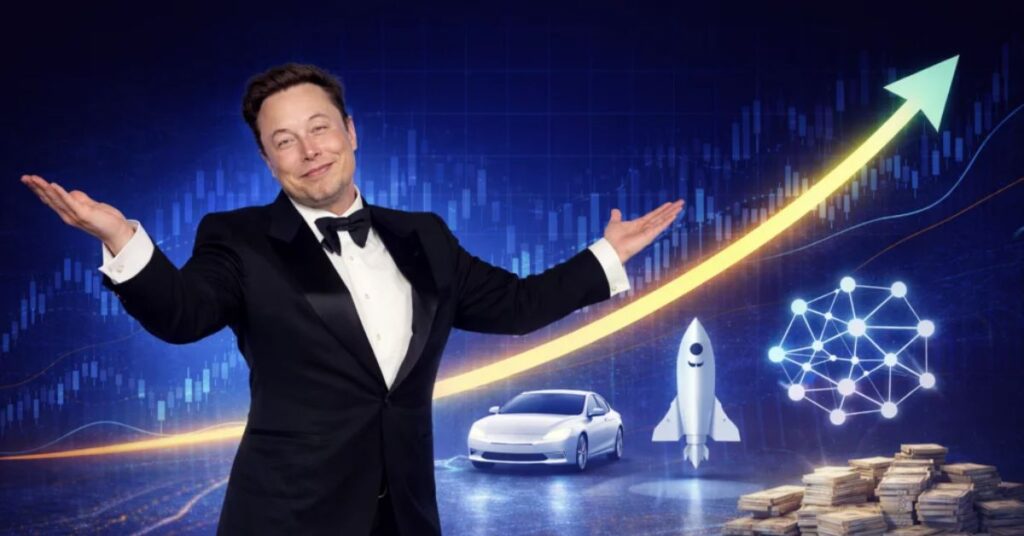
The net worth of Elon Musk is primarily driven by a combination of high-value equity holdings, private company valuations, and performance-based compensation structures. Unlike traditional wealth sources such as salaries or fixed assets, Musk’s fortune is deeply tied to the success and market perception of his ventures.
Below are the key drivers that significantly influence Elon Musk net worth in dollars and its global equivalents like Elon Musk net worth in billion, rupees, or even speculative trillion projections.
Tesla’s Role in His Net Worth
Tesla remains the single largest contributor to Musk’s wealth. As CEO and major shareholder, his net worth is heavily influenced by Tesla’s stock performance.
- Tesla is a publicly traded company, meaning its stock price fluctuates daily.
- Musk’s equity stake translates directly into billions of dollars in valuation.
- Market sentiment, production numbers, and innovation announcements all affect Tesla’s share price.
Impact Summary:
- Strong Tesla earnings → Increase in net worth
- Stock dips → Immediate reduction in net worth
- Investor confidence → Long-term wealth stability
Tesla’s dominance in the electric vehicle market has been a cornerstone in shaping Elon Musk net worth 2026 projections.
SpaceX Valuation and Private Market Growth
SpaceX is another major pillar of Musk’s wealth, though it is a privately held company.
- Its valuation has grown rapidly due to contracts with NASA and commercial satellite launches
- Private funding rounds have significantly increased their estimated worth
- Musk holds a substantial ownership stake
Even though SpaceX is not publicly traded, its increasing valuation contributes heavily to estimates of Elon Musk net worth in billions.
xAI and Emerging Ventures
Musk’s newer ventures, including xAI, are focused on artificial intelligence and next-generation technologies.
- xAI aims to compete in the rapidly growing AI sector
- These ventures are still in early stages, but have high growth potential
- Future valuations could significantly impact Musk’s overall wealth
Such investments are often included in long-term projections when estimating Elon Musk net worth in trillion-dollar scenarios.
IPOs and Equity-Based Compensation
A major factor behind Musk’s wealth is his compensation structure:
- He typically receives stock options instead of a fixed salary
- Compensation is tied to the performance milestones of Tesla
- Equity packages unlock based on achieving specific market cap and operational targets
This structure aligns his personal wealth directly with company performance, making his financial growth exponential during bullish market cycles.
Summary of Wealth Drivers
| Driver | Type | Contribution |
| Tesla | Public equity | Largest contributor |
| SpaceX | Private equity | High valuation growth |
| xAI | Emerging venture | Future potential |
| Equity Compensation | Performance-based | Wealth expansion mechanism |
Wealth Milestones and Global Comparisons
The financial journey of Elon Musk is marked by several major wealth milestones that reflect both his business success and global economic influence. His net worth has not only grown in absolute terms but has also consistently placed him among the top wealth holders in modern history. Discussions around Elon Musk net worth in billions of dollars, and even speculative trillion-level valuations, often arise when analysing these milestones in a global context.
Below is a structured overview of key milestones and comparisons that highlight the scale of his wealth.
Elon Musk Net Worth Milestones & Global Comparisons
| Milestone Stage | Estimated Net Worth Range | Key Drivers | Global Comparison |
| Early Billionaire Phase | $1B+ | PayPal acquisition | Entry into global billionaire rankings |
| Tesla Growth Phase | $20B – $100B | Tesla stock surge | Among the top 10 richest individuals |
| Market Expansion Phase | $100B – $200B | Tesla dominance + SpaceX growth | Competing for the #1 global rank |
| Peak Valuation Surges | $200B – $400B+ | Tech stock boom, investor confidence | Frequently, the richest person globally |
| Recent Estimates (2026 context) | Hundreds of billions | Multi-company valuation growth | Maintains top-tier global ranking |
| Speculative Future | Approaching trillion-level discussions | AI, space, and long-term equity growth | Theoretical trillionaire discussions |
Global Context of His Wealth
- GDP Comparisons: At peak valuations, Musk’s net worth has been compared to the GDP of small countries.
- Wealth Concentration: His fortune represents a significant concentration of wealth in a single individual.
- Market Influence: Movements in Tesla stock alone can shift his ranking among global billionaires.
- Currency Conversions:
- Elon Musk net worth in rupees and crores is often used for regional understanding in South Asia.
- Elon Musk net worth in dollars remains the standard global benchmark.
Ranking Among Global Billionaires
Elon Musk has consistently ranked among the top individuals in global wealth lists over recent years. His position fluctuates due to:
- Stock market volatility
- Changes in Tesla valuation
- Private funding rounds for SpaceX
- Broader economic conditions affecting tech industries
Market and Public Reactions to Elon Musk’s Wealth
The immense wealth of Elon Musk has attracted continuous attention from markets, media, policymakers, and the general public. Elon Musk net worth in dollars, often fluctuating in the hundreds of billions, is not only a financial metric but also a topic of global discussion that influences investor sentiment and public opinion.
Market Reactions to Net Worth Fluctuations
Financial markets closely monitor Musk’s wealth because a significant portion is tied to publicly traded assets, especially Tesla.
- When Tesla stock rises → Musk’s net worth increases
- When Tesla stock declines → his net worth decreases
- Investor confidence often correlates with Musk’s leadership announcements and company performance
Market participants frequently interpret changes in his wealth as a signal of:
- Company health
- Future growth expectations
- Broader tech sector trends
Media Coverage and Public Attention
The media regularly tracks and reports on Elon Musk net worth in billions due to its global relevance.
Common themes include:
- Comparisons with other billionaires
- Milestones such as reaching new wealth peaks
- Discussions about Elon Musk net worth 2026 projections
- Speculation about Elon Musk net worth in trillion-dollar scenarios
Media narratives often emphasise both his entrepreneurial success and the volatility of his wealth.
Public Perception and Debate
Public reactions to Musk’s wealth are mixed and often polarised:
- Admiration: Many view him as a visionary innovator driving technological progress
- Criticism: Others raise concerns about wealth concentration and inequality
- Curiosity: His lifestyle, investments, and decisions frequently trend on social platforms
Policy and Economic Discussions
Musk’s wealth is also referenced in broader discussions about:
- Taxation of high-net-worth individuals
- Wealth inequality and redistribution
- Corporate governance and executive compensation
- Influence of ultra-wealthy individuals on markets and industries
Summary of Reactions
| Group | Reaction Type | Focus Area |
| Investors | Analytical | Stock performance, valuation impact |
| Media | Informational & speculative | Rankings, milestones, projections |
| Public | Mixed sentiment | Admiration vs inequality concerns |
| Policymakers | Regulatory interest | Taxation and economic impact |
The Tesla Pay Package and Compensation Structure
The compensation structure of Elon Musk is one of the most unique and widely discussed executive pay models in corporate history. Unlike traditional CEOs who receive fixed salaries and bonuses, Musk’s earnings are heavily tied to performance-based equity incentives, primarily through stock options.
This structure has played a major role in shaping Elon Musk net worth in dollars, as his wealth is directly linked to Tesla’s long-term success and market valuation.
Overview of the Compensation Model
| Component | Description | Impact on Net Worth |
|---|---|---|
| Base Salary | Minimal or symbolic | Negligible contribution |
| Stock Options | Granted based on performance milestones | Major wealth driver |
| Performance Targets | Market cap and operational goals | Triggers equity vesting |
| Long-Term Incentives | Multi-year strategic goals | Aligns with company growth |
Performance-Based Milestones
Musk’s compensation package is structured around achieving specific milestones, such as:
- Increasing Tesla’s market capitalisation
- Meeting revenue and profitability targets
- Achieving operational and production benchmarks
When these targets are met, stock options are unlocked, significantly increasing his ownership value and contributing to Elon Musk net worth in billions.
Why This Model Is Unique
- Zero Traditional Salary Dependence: Musk does not rely on a high fixed income
- Equity-Driven Wealth: His earnings are tied almost entirely to company performance
- Risk-Reward Alignment: If Tesla performs well, its wealth increases; if not, its compensation remains limited
- Long-Term Focus: Encourages sustained growth rather than short-term gains
Controversies and Discussions
The Tesla compensation plan has sparked debate in financial and legal circles:
- Some view it as a fair incentive aligned with shareholder value
- Others question the scale of potential payouts
- Legal challenges have been raised regarding approval processes and governance
- Discussions often appear in the media when analysing Elon Musk net worth 2026 projections
Impact on Net Worth Growth
The compensation structure has contributed significantly to Musk’s financial rise:
- Stock option grants have unlocked billions in value over time
- Tesla’s stock performance directly amplifies its wealth
- Each milestone achievement can lead to substantial net worth increases
Key Insight
The compensation system of Elon Musk is a defining factor behind his wealth accumulation. By tying earnings to long-term company success, it creates a direct link between Tesla’s performance and Elon Musk net worth in dollars, making his financial trajectory highly sensitive to market and operational outcomes.
Impact of Elon Musk’s Wealth on the Inequality Debate
The extraordinary net worth of Elon Musk has made him a central figure in global discussions about wealth inequality, economic concentration, and the distribution of financial resources. His Elon Musk net worth in dollars, often in the hundreds of billions, is frequently cited in debates comparing individual wealth to societal averages and global income distribution.
Wealth Concentration and Global Inequality
Musk’s wealth represents a highly concentrated form of economic power. While it is primarily derived from equity in companies, it still raises questions about how wealth is distributed across populations.
| Aspect | Inequality Perspective |
| Wealth Scale | Extremely high relative to the median global income |
| Ownership Model | Concentrated equity ownership in major companies |
| Economic Influence | Indirect influence through corporate valuation and innovation |
| Comparison Basis | Used in discussions of wealth gaps between the ultra-rich and average individuals |
Insights from Inequality Discussions
- A small number of individuals hold a disproportionately large share of global wealth
- Musk’s financial profile is often used as an example in reports analysing wealth concentration trends
- Organisations and economists frequently reference figures like Elon Musk net worth in billions to illustrate extremes in global wealth distribution
Economic and Social Perspectives
Different viewpoints emerge in the inequality debate:
1. Supportive View:
- Wealth is seen as a result of innovation and value creation
- High net worth incentivises entrepreneurship and technological advancement
- Musk’s companies contribute to jobs, technology, and infrastructure
2. Critical View:
- A high concentration of wealth may widen economic gaps
- Raises concerns about fairness in resource distribution
- Sparks discussions on taxation policies and social equity
Role in Policy and Research
Musk’s wealth is often referenced in:
- Economic inequality reports
- Academic studies on wealth distribution
- Policy discussions on the taxation of ultra-high-net-worth individuals
- Global analyses comparing billionaire wealth vs GDP or median income
Public Discourse and Media Narratives
Public conversations around Elon Musk’s net worth often include:
- Comparisons between billionaire wealth and average household income
- Debates on whether such wealth levels are beneficial or problematic
- Discussions about the implications of Elon Musk net worth in 2026 in shaping future economic trends
Key Events Influencing Recent Net Worth Changes
The net worth of Elon Musk has experienced significant fluctuations in recent years due to a combination of corporate developments, market dynamics, and strategic business decisions. Since a large portion of his wealth is tied to equity in companies like Tesla and SpaceX, even relatively small changes in valuation can lead to substantial shifts in Elon Musk net worth in dollars.
Major Events Impacting Net Worth
| Event Type | Description | Effect on Net Worth |
| Tesla Stock Movements | Price increases or declines in Tesla shares | Direct rise/fall in wealth |
| SpaceX Valuation Rounds | Private funding rounds boosting valuation | Increases estimated net worth |
| AI and Tech Ventures | Expansion into AI (xAI) and related sectors | Adds future growth potential |
| Market Conditions | Interest rates, inflation, tech sector trends | Influences investor sentiment |
| Strategic Decisions | Leadership moves, product launches | Impacts company confidence |
Tesla-Related Developments
Tesla remains the most influential factor in Musk’s wealth:
- Product innovations and delivery numbers affect investor confidence
- Quarterly earnings reports often trigger stock volatility
- Expansion into new markets and technologies influences long-term valuation
These movements directly impact Elon Musk net worth in billions, as Tesla represents a major portion of his holdings.
SpaceX Growth and Private Valuation
SpaceX, though privately held, plays a crucial role in net worth estimation:
- Successful launches and contracts (including government and commercial missions) boost valuation
- Funding rounds with private investors increase the company’s worth
- Starlink expansion contributes to long-term revenue expectations
Because Musk owns a significant stake, rising valuations positively influence Elon Musk net worth in trillion-dollar projections in speculative analyses.
Expansion into AI and Emerging Technologies
Recent years have seen increased focus on artificial intelligence ventures such as xAI:
- Entry into competitive AI markets
- Development of advanced models and platforms
- Strategic positioning in one of the fastest-growing tech sectors
These ventures add future potential value, which analysts often factor into Elon Musk net worth 2026 forecasts.
Market Volatility and Economic Conditions
External macroeconomic factors also play a key role:
- Interest rate changes affecting tech stock valuations
- Inflation and global economic trends
- Investor sentiment toward growth stocks
- Broader stock market cycles
Such factors can cause rapid increases or decreases in Musk’s net worth without any direct change in his business operations.
Timeline of Elon Musk’s Net Worth Growth
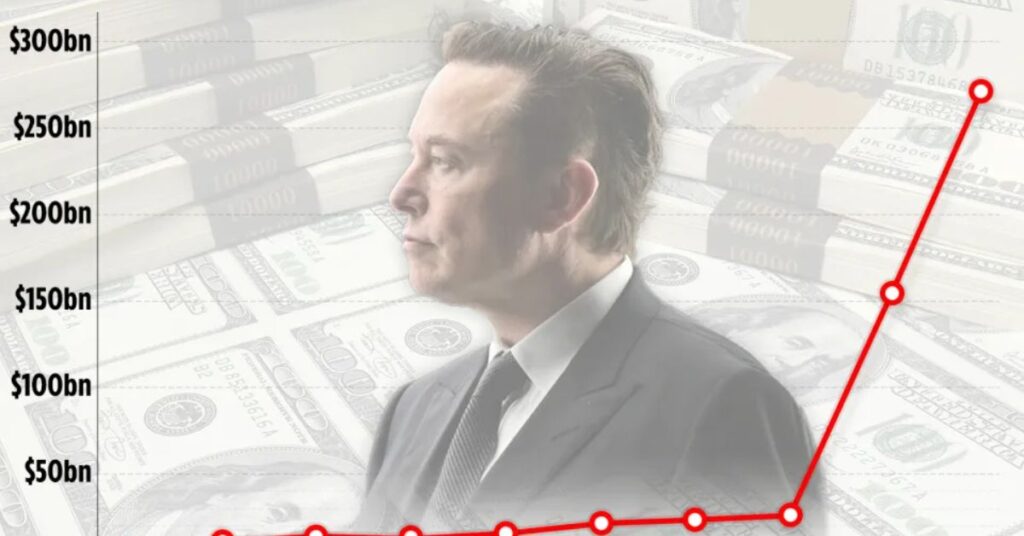
The growth of Elon Musk’s net worth reflects a gradual rise from early entrepreneurial success to becoming one of the wealthiest individuals in modern history. His wealth trajectory has been closely tied to major business milestones, particularly the expansion of Tesla and SpaceX, along with market-driven valuation changes that influence Elon Musk net worth in dollars over time.
Net Worth Growth Timeline Overview
| Period | Estimated Net Worth | Key Milestones | Growth Drivers |
| Late 1990s | <$100M | Zip2 sale | Initial capital from the startup exit |
| Early 2000s | ~$100M+ | PayPal acquisition | Liquidity from e-commerce success |
| 2010–2015 | <$10B | Tesla expansion phase | Early Tesla growth and IPO impact |
| 2016–2019 | ~$10B – $25B | Tesla scaling + SpaceX progress | Increasing stock value and private valuation |
| 2020 | ~$25B – $150B | Tesla stock surge | Massive increase in Tesla market cap |
| 2021 | ~$150B – $300B+ | Peak stock performance | Tech boom and investor confidence |
| 2022–2024 | Fluctuating ~$150B – $250B | Market corrections | Volatility in the tech sector |
| 2025–2026 (approx.) | Hundreds of billions | AI ventures + SpaceX growth | Multi-company expansion |
Key Phases of Growth
1. Startup Phase:
Musk’s early ventures provided the initial capital base that enabled future investments.
2. Reinvention Phase:
Reinvestment into Tesla and SpaceX marked the beginning of exponential wealth growth.
3. Acceleration Phase:
Tesla’s IPO and stock surge significantly boosted Elon Musk net worth in billion-dollar terms.
4. Market Dominance Phase:
Tesla became a global leader in EVs, driving Musk’s net worth into the hundreds of billions.
5. Diversification Phase:
Expansion into AI (xAI) and continued growth of SpaceX added new dimensions to his wealth portfolio.
Elon Musk’s Philanthropy: Giving Back to Humanity
Elon Musk’s wealth is not merely for personal gain; a significant portion of it is dedicated to improving the future of humanity. In 2012, Musk signed “The Giving Pledge,” committing to donate more than 50% of his wealth to charitable causes during his lifetime.
1. The Musk Foundation
In 2002, Musk founded the “Musk Foundation” alongside his brother, Kimbal Musk. The foundation’s objectives are very clear:
- Renewable Energy: Supporting projects for clean and affordable energy.
- Space Exploration: Assisting research to make humanity a “multi-planetary species.”
- Pediatric Research: Funding research into children’s health and diseases.
- AI Safety: Working to ensure that Artificial Intelligence remains a benefit rather than a threat to humanity.
2. Major Donations & Initiatives
Musk has made several large-scale donations over the years that showcase his “Human Touch”:
- XPRIZE Carbon Removal: Musk launched a $100 million prize for those who develop the best and most affordable technology to remove carbon from the atmosphere.
- Education: He has donated millions of dollars to Khan Academy and other online education platforms to ensure every child has access to free education.
- Tesla Open Source: In a massive act of “Scientific Philanthropy,” he made Tesla’s patents “Open Source,” allowing other companies to build affordable electric cars and accelerate sustainable transport.
Philanthropy Overview Table
| Cause | Impact / Donation |
| Environmental Protection | $100 Million for Carbon Removal Tech |
| Scientific Research | Funding for AI Safety (OpenAI’s early phase) |
| Crisis Relief | Solar power systems for disaster-hit areas |
| Education | Support for STEM education in schools |
Conclusion:
The net worth of Elon Musk represents more than just personal financial success; it reflects the evolution of technology-driven wealth in the modern era. His Elon Musk net worth in dollars, often ranging in the hundreds of billions, continues to fluctuate based on market conditions, company performance, and innovation cycles across Tesla, SpaceX, and emerging ventures.
Looking ahead, discussions around Elon Musk net worth 2026 and beyond are closely tied to the growth of artificial intelligence, space exploration, and sustainable energy. If his companies continue to expand and dominate their respective industries, projections around Elon Musk net worth in trillions may become part of long-term speculative analysis, although such outcomes depend on sustained valuation growth and global economic conditions.
From a broader perspective, his wealth highlights key themes in today’s global economy:
- The increasing role of equity-based wealth creation
- The impact of innovation on financial growth
- The influence of private and public markets on individual fortunes
- Ongoing debates around wealth concentration and economic inequality
In regional contexts, conversions such as Elon Musk net worth in rupees and crores help audiences better understand the scale of his wealth, reinforcing how globally interconnected financial metrics have become.
Ultimately, the financial journey of Elon Musk is still evolving. Whether measured in billions today or discussed in trillion-level projections for the future, his net worth remains a benchmark for entrepreneurial ambition, technological advancement, and the changing nature of global wealth creation.
FAQs
Q1. What is Elon Musk net worth in dollars?
A1. His net worth is typically in the hundreds of billions of dollars, fluctuating with market conditions.
Q2. Why does Elon Musk net worth change frequently?
A2. Most of his wealth is tied to stock and private company valuations, which vary with market performance.
Q3. What are the main sources of Elon Musk’s wealth?
A3. His primary sources are Tesla equity, SpaceX valuation, and other ventures like AI-related companies.
Q4. Is Elon Musk close to becoming a trillionaire?
A4. While speculative discussions exist, it would depend on significant future growth in his companies’ valuations.
Q5. How is Elon Musk net worth calculated?
A5. It is estimated based on the market value of his publicly traded shares and private company valuations minus liabilities.
